



TLDR; In Today’s Signal
OpenAI Invests in Brain–Computer Interface Startup Merge Labs
Wikimedia Expands Paid AI Data Partnerships
Raspberry Pi Brings Generative AI to the Edge
Amazon Bedrock Enables AI-Driven Business Reporting
Microsoft Launches AI Programs for Education
AI Optimizes Pharmacy Operations in Kenya
Microsoft Releases OptiMind Optimization Research Model
Nvidia CEO Discusses Task-Level AI Impact
THE AI SIGNAL PICKS
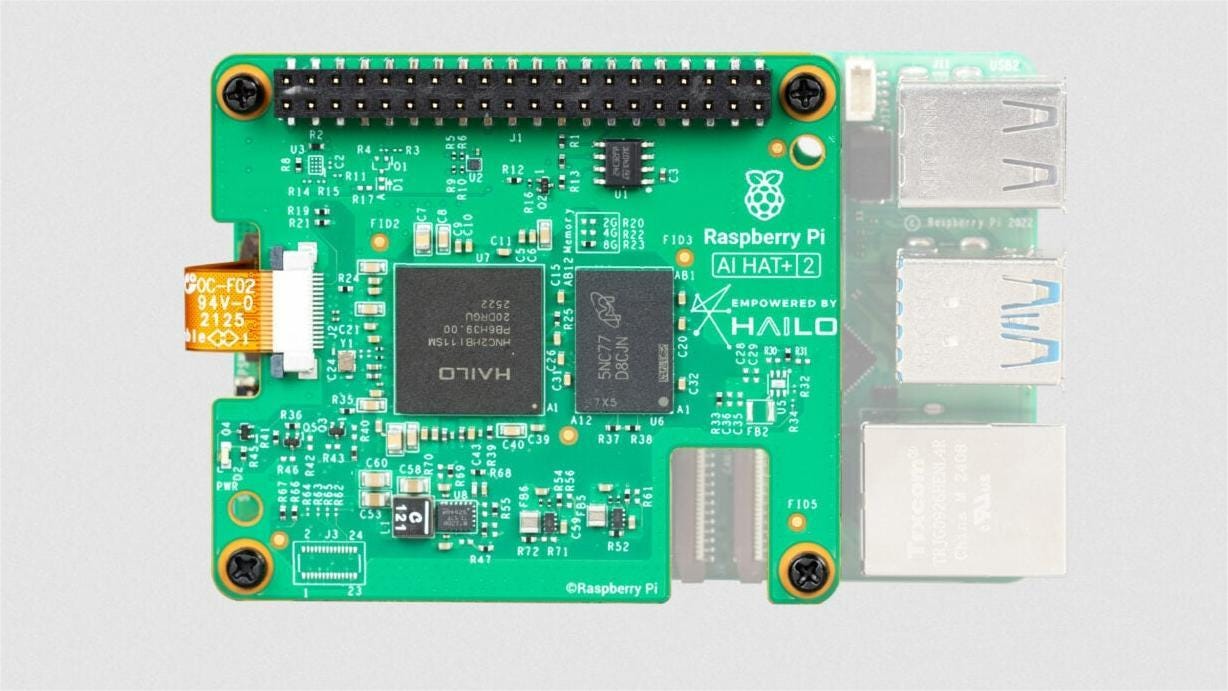
Raspberry Pi Enables Local Generative AI on Edge Devices
Raspberry Pi introduced the AI HAT+ 2 with the Hailo-10H accelerator delivering up to 40 TOPS and 8GB on-board RAM, enabling local inference for LLMs, VLMs, and generative workloads on Raspberry Pi 5. Supported models include DeepSeek-R1-Distill, Llama 3.2, and Qwen variants, with LoRA fine-tuning supported for task-specific adaptation.
OpenAI-Backed Lab Advances High-Bandwidth Brain–Computer Interfaces
Merge Labs is pursuing non-invasive brain–computer interfaces that interact with neurons at scale using molecular connections and deep-reaching modalities such as ultrasound, rather than implanted electrodes. The lab aims to dramatically increase neural bandwidth and coverage while integrating advanced AI, targeting initial medical applications before broader human-AI augmentation.
Wikimedia Expands Enterprise AI Data Access at Scale
The Wikimedia Foundation formalized new Wikimedia Enterprise partnerships with Amazon, Meta, Microsoft, Mistral AI, and Perplexity, providing high-throughput APIs for human-curated knowledge across Wikipedia and related projects. The platform offers on-demand, snapshot, and real-time data access, positioning Wikipedia as a core dataset for large-scale AI systems and RAG pipelines.
Microsoft Research Releases OptiMind Optimization Model
OptiMind is a specialized language model designed to convert natural-language optimization problems directly into solver-ready mathematical formulations. Released experimentally on Hugging Face, it targets domains such as supply chains, logistics, scheduling, and portfolio optimization, reducing formulation time—the primary bottleneck in many optimization workflows.
THE BIG LEAP
Meta Introduces Multimodal AI with SAM Audio
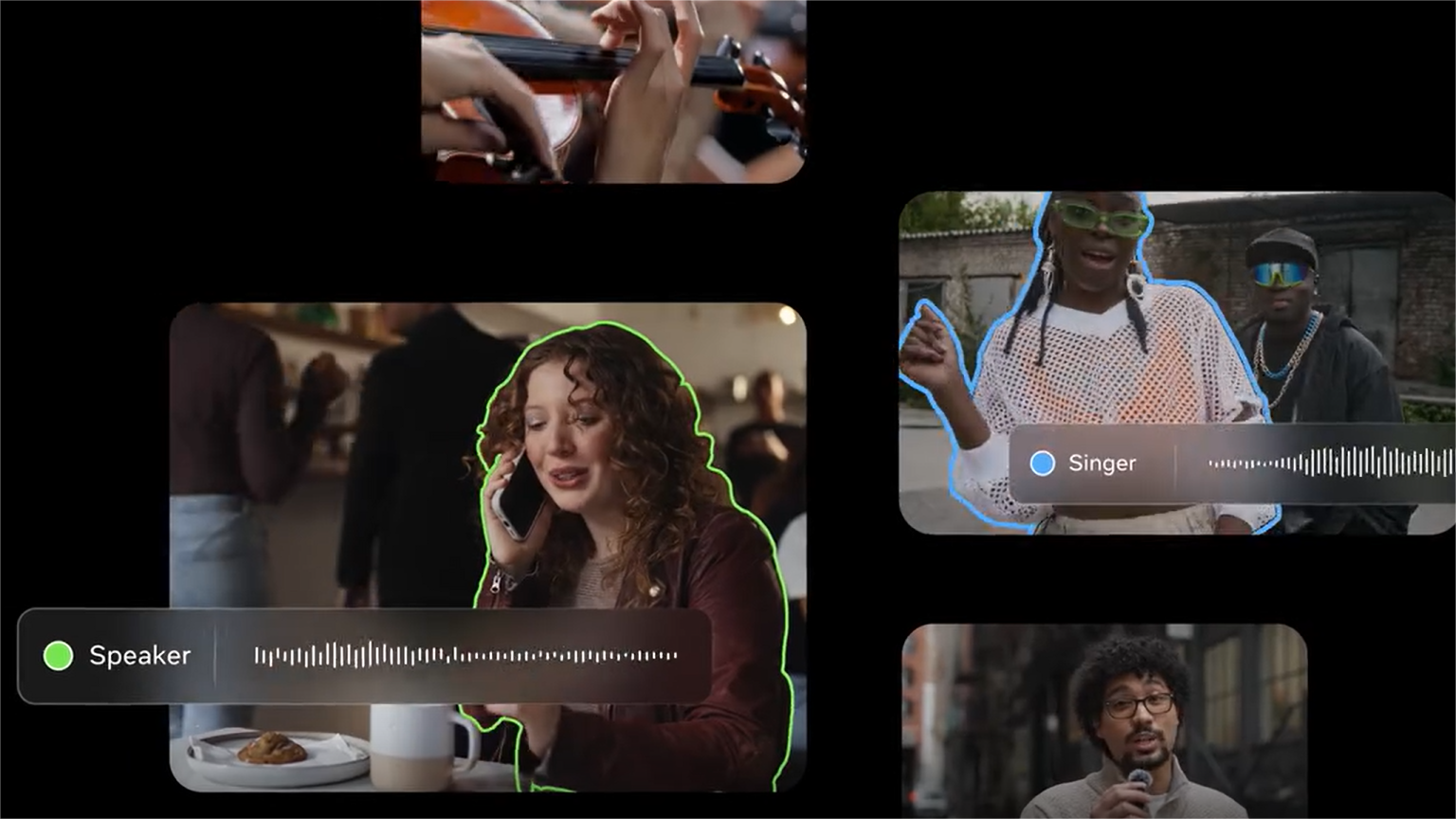
Signal Scoop: Meta introduced SAM Audio, a unified model that enables audio separation using text, visual, and temporal prompts, extending the Segment Anything framework from vision into sound.
The Full Picture
SAM Audio allows users to isolate specific sounds from complex audio mixtures using natural prompts, including text descriptions, visual object clicks, and time-span markers.
The model is powered by Perception Encoder Audiovisual (PE-AV), built on Meta’s open-source Perception Encoder and trained on over 100 million videos using multimodal contrastive learning.
Meta released SAM Audio-Bench, the first in-the-wild audio separation benchmark, and SAM Audio Judge, a reference-free evaluation model aligned with human auditory perception.
SAM Audio operates faster than real time (RTF ≈ 0.7) and supports open-domain separation across speech, music, and general sound events, with models ranging from 500M to 3B parameters.
What You Can’t Miss
SAM Audio, PE-AV, SAM Audio-Bench, and SAM Audio Judge are available today via the Segment Anything Playground, alongside SAM 3 and SAM 3D, with research papers released for technical evaluation.
Big Tech Reclaims the AI Talent Stack
Signal Scoop: Several senior researchers and founding team members have departed Thinking Machines Lab, the AI startup led by former OpenAI CTO Mira Murati, to return to OpenAI, highlighting escalating competition for elite AI talent among foundation model labs.
The Full Picture
Departures include Brett Zoph, Luke Metz, and Sam Schoenholz—core contributors to Thinking Machines’ founding research team—along with additional staff exits reported in subsequent days.
The moves come despite Thinking Machines raising $2 billion in a record seed round in mid-2025, valuing the company at approximately $12 billion, with discussions reportedly underway for a much larger follow-on round.
Established labs such as OpenAI, Meta, Google DeepMind, and Anthropic are leveraging superior cash compensation, liquid equity, GPU access, and mature infrastructure to attract and retain researchers.
Newer “neo labs” face constraints around compute availability, slower product timelines, and less clarity on commercialization, making retention more difficult even with substantial venture backing.
What You Can’t Miss
The exits occurred despite multi-billion-dollar funding at newer labs, while established AI firms continue to offer higher cash compensation, faster equity liquidity, greater compute access, and active product pipelines.
ON THE AI EDGE
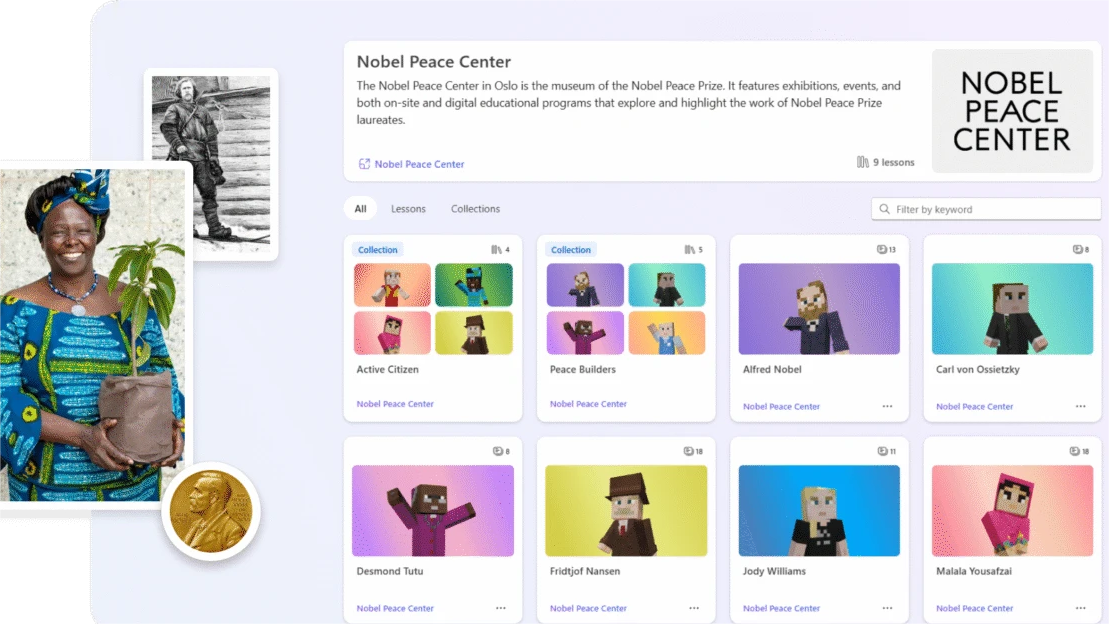
Microsoft Expands AI Tools and Programs for Education
Microsoft introduced Microsoft Elevate for Educators alongside new AI-powered education tools, including Teach in Microsoft 365 Copilot, Learning Zone for Copilot+ PCs, and the Study and Learn Agent for students. The launch combines AI classroom tools, global educator communities, professional credentials, and free access to Microsoft 365 and LinkedIn Premium for eligible students, targeting AI-ready education systems.
Amazon Bedrock Powers Generative AI Business Reporting
Amazon Web Services released a reference architecture for a generative-AI enterprise reporting assistant built on Amazon Bedrock, using serverless AWS components to automate report drafting, rephrasing, verification, and aggregation. The system integrates LLMs, real-time WebSocket interaction, DynamoDB-backed memory, and guardrails to reduce manual reporting time, enforce consistency, and enable scalable, secure internal business communication.
Nvidia CEO Describes Task-Level Impact of AI on Jobs
Jensen Huang explained that AI primarily automates discrete tasks rather than eliminating the broader purpose of jobs, citing radiology, software engineering, law, and service roles as examples. He noted that task automation has coincided with increased employment and compensation in some fields, as productivity gains enable organizations to expand output and demand for human judgment, accountability, and problem-solving.
AI Optimizes Pharmacy Operations in Kenya
Microsoft is enabling AI-led digital transformation in Kenya’s retail pharmacy sector through Zendawa, an AI-powered platform built on Microsoft 365 Copilot and Power BI. The system automates inventory management, flags near-expiry drugs, and improves stock efficiency for small, independent pharmacies operating on thin margins. Early deployments report waste reduction of over 65%, with more than 820 pharmacies onboarded since 2023, improving medicine availability and operational efficiency amid severe pharmacist shortages.
AI START-UP NEWS
German AI Startup Parloa Hits $3B Valuation
Parloa raised $350 million in a Series D round led by General Catalyst, tripling its valuation to $3 billion in under a year. The company builds low-code AI voice agents for enterprise customer service, serving clients including Microsoft, Accenture, KPMG, and Booking.com, with annual recurring revenue exceeding $50 million.
AI Video Startup Higgsfield Reaches $1.3B Valuation
San Francisco–based Higgsfield raised $80 million in a Series A extension, valuing the company at over $1.3 billion. Backed by Accel, GFT Ventures, and Menlo Ventures, the startup reported an annualized revenue run rate of $200 million. Higgsfield builds application-layer video tools atop third-party foundation models, using a proprietary reasoning engine to maintain character and brand consistency, with social media marketers accounting for roughly 85% of platform usage.
NEW TOOLS, NEW POSSIBILITIES
Trigger.dev – An open-source developer platform for building reliable background jobs, workflows, and event-driven automation directly in code.
Refact.ai – An AI-powered coding assistant and autonomous agent that helps developers write, refactor, and understand code efficiently.
Supergrow – An AI-driven LinkedIn growth tool that enables professionals and creators to generate, schedule, and optimize content at scale.
Delve.ai – An AI analytics platform that automatically generates data-driven personas and audience insights for marketing and product teams.
AI CAREER HORIZON
Google Cloud: Customer Engineering, Infrastructure & Modernization (Remote, Brazil)
Amazon Web Services (AWS): Software Development Engineer, Amazon Elastic File System (USA, MA, Boston)
Oracle: AI and Analytics Lead – Human Resources (US)
IBM: Application Architect – COBOL to Java (UK, Remote)