



TLDR; In Today’s Signal
OpenAI Revenue Crosses $20B Annual Run Rate
Baidu AI Assistant Reaches 200M Monthly Active Users
Elon Musk Criticises X Algorithm After Open-Sourcing
OpenAI Prepares First AI Hardware Device
Amazon Ex-CEO Builds CRM Tool in One Day
Bristol Myers Squibb Advances AI Cancer Detection
Vibe Coding Startup Emergent Raises $70M
Legal AI Startup Ivo Raises $55M
THE AI SIGNAL PICKS

OpenAI Revenue Crosses $20B Annual Run Rate
OpenAI reported that its annualized revenue surpassed $20 billion in 2025, up from $6 billion in 2024, with growth closely tracking a threefold expansion in computing capacity to 1.9 GW. CFO Sarah Friar highlighted sustained all-time highs in usage across text, image, voice, code, and API products, reinforcing OpenAI’s evolution into an infrastructure-scale AI provider. The company’s next phase will prioritize agent-based systems and workflow automation, while maintaining a capital-light strategy through flexible partnerships rather than owning hardware.
Amazon Ex-Consumer CEO Builds Custom CRM in One Day
Dave Clark, former CEO of Amazon’s Worldwide Consumer business, revealed that he built a custom CRM in one day using vibe-coding tools after abandoning rigid off-the-shelf SaaS products. By removing vendor dependencies and internal coordination friction, Clark compressed execution timelines from months to days. The episode reflects a growing enterprise trend toward AI-assisted internal tooling, though experts caution such solutions are currently better suited for prototyping and internal workflows than regulated production systems.
Baidu AI Assistant Surpasses 200M Monthly Users
Baidu’s Ernie AI Assistant has exceeded 200 million monthly active users, signaling rapid adoption as AI becomes embedded within China’s consumer internet ecosystem. Integrated directly into Baidu’s core search app and desktop environments, the assistant functions as a default interface rather than a standalone product. The milestone highlights intensifying competition among Chinese tech firms to control AI-native distribution and user engagement layers.
THE BIG LEAP
Claude Code Signals AI’s Shift Beyond Engineers
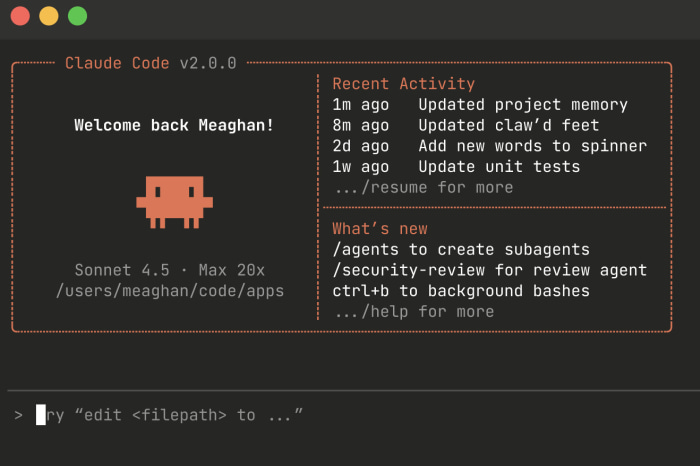
Signal Scoop: Anthropic’s Claude Code is triggering a rare convergence of technical adoption, market reaction, and behavioral change, as advanced AI tooling moves decisively beyond engineers into general professional use. What began as a high-end coding assistant is now being treated as an autonomous work engine, reshaping expectations around productivity, hiring, and the economics of traditional software.
The Full Picture
Claude Code, powered by the Claude Opus 4.5 model, operates with broad autonomy across files, browsers, and applications, enabling multi-step execution rather than prompt-response interaction.
Adoption has expanded rapidly beyond developers, with executives, founders, and non-technical users building functional applications, analytical tools, and operational workflows without prior coding experience.
Early user reports point to extreme productivity compression, with weeks or months of work reduced to days, and some companies reconsidering software hiring or SaaS procurement as a result.
Market sentiment is reacting in parallel: a Morgan Stanley SaaS index is down sharply year-to-date, reflecting investor concern that on-demand, AI-built tools could erode the recurring-revenue logic underpinning traditional software valuations.
What You Can’t Miss
This is not simply another leap in AI-assisted coding. Claude Code offers one of the clearest early signals of a shift toward self-directed software creation, where AI systems do not just help build products but become the product-building layer themselves. If this capability generalizes beyond software engineering, it challenges long-held assumptions about who builds tools, how fast they are created, and where value accrues in the software economy.
AI Begins Detecting Invisible Cancer Signals

Signal Scoop: AI research is crossing a critical threshold in medicine, moving from assisting diagnosis to uncovering biological signals that are invisible to human observers. New systems can now infer immune cell activity within tumors using only standard pathology slides, dramatically expanding the informational value of low-cost clinical data.
The Full Picture
Researchers developed models that analyze routine hematoxylin-and-eosin pathology slides to infer immune cell states such as activation, suppression, or exhaustion—information previously inaccessible without expensive laboratory techniques.
The approach was trained by pairing standard slides with advanced immune measurements, allowing AI to learn which spatial patterns correspond to underlying immune behavior.
This work reflects a broader shift toward modeling biology as a spatial system, where the arrangement and interaction of cells carry critical information lost in averaged data.
Researchers emphasize these systems are not replacements for experiments, but tools to guide hypotheses, prioritize investigations, and scale biological insight across large datasets.
What You Can’t Miss
This marks a transition from AI as an analytical aid to AI as a scientific instrument. By revealing latent biological signals at scale, AI is beginning to expand the observable boundaries of medicine—reshaping how research, diagnosis, and treatment discovery may evolve over the next decade.
ON THE AI EDGE
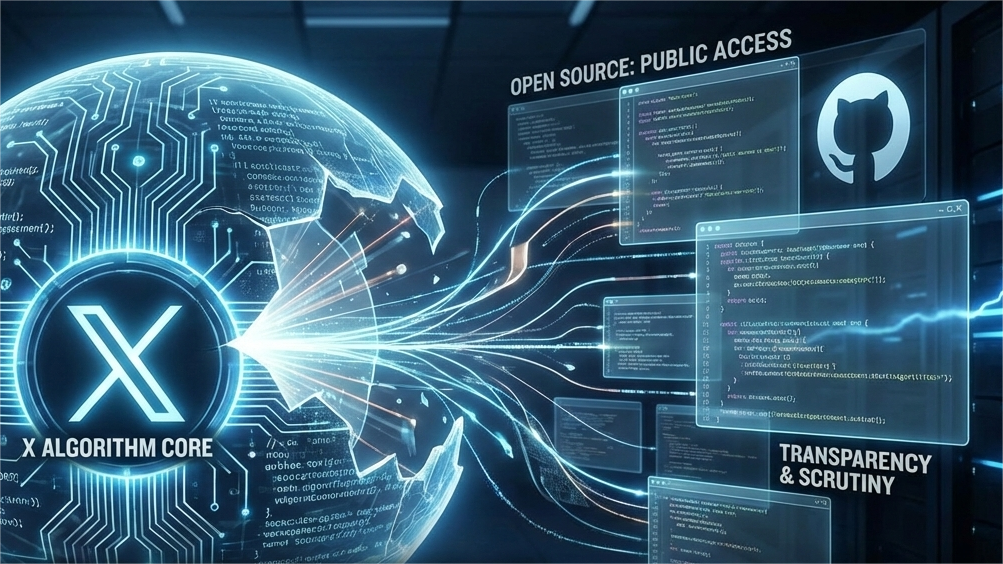
Elon Musk Open-Sources X Recommendation Algorithm
Elon Musk confirmed that X has open-sourced the full production codebase behind its recommendation algorithm, acknowledging that the system has “notable flaws” while arguing that transparency outweighs imperfection. The algorithm, built on the same transformer-based architecture used in xAI’s Grok model, governs both organic content and advertising ranking and is now publicly available on GitHub. The move reframes transparency as a continuous process rather than a static disclosure, while underscoring that algorithmic quality depends as much on system design and feedback dynamics as on code visibility.
OpenAI Prepares First AI Hardware Device
OpenAI is preparing to unveil its first hardware product in the second half of 2026, marking its initial move beyond software and APIs into consumer-facing devices. The effort is led by a newly assembled design team following OpenAI’s $6.5 billion acquisition of “io,” the startup founded by former Apple design chief Jony Ive. The device is expected to be voice-first and screenless, with commercial availability likely following in 2027. While details remain limited, the initiative signals OpenAI’s intent to experiment with direct user interfaces without yet committing to a full hardware platform strategy.
Bristol Myers Squibb Advances AI Lung Cancer Detection
Bristol Myers Squibb announced a collaboration with Microsoft to deploy AI-driven workflows for early lung cancer detection across U.S. healthcare systems. The initiative integrates FDA-cleared radiology AI algorithms into Microsoft’s Precision Imaging Network, enabling automated analysis of X-ray and CT scans to surface hard-to-detect lung nodules and support clinical triage. Beyond diagnostic efficiency, the collaboration emphasizes follow-up tracking and expanded access to early detection in medically underserved communities, positioning AI as an operational layer within population-scale cancer screening rather than a standalone diagnostic tool.
AI START-UP NEWS
Emergent Raises $70M as Vibe Coding Accelerates
Emergent, a Y Combinator–backed startup founded by Mukund Jha and Madhav Jha, raised $70 million in Series B funding led by Khosla Ventures and SoftBank Vision Fund 2. The company has scaled rapidly to 5 million users, with annual recurring revenue jumping from $100,000 to $50 million in seven months. Emergent positions itself beyond prototyping, targeting full-lifecycle software creation for non-technical users, signaling rising investor confidence in AI-native development platforms as alternatives to traditional SaaS tooling.
Legal AI Startup Ivo Raises $55M at $355M Valuation
Ivo secured $55 million in Series B funding led by Blackbird, valuing the company at approximately $355 million. Ivo automates complex contract review and analysis for enterprise customers including Uber, Shopify, IBM, Reddit, and Canva, with revenue increasing sixfold since its last round. The company differentiates itself by decomposing contract analysis into hundreds of specialized AI tasks, addressing accuracy concerns that have plagued legal AI adoption, and plans to triple its workforce by the end of 2026.
NEW TOOLS, NEW POSSIBILITIES
TraceLoop – AI observability tool that adds structured tracing, evaluation, and monitoring for LLM-powered systems.
HoneyHive – AI observability and evaluation platform that helps teams continuously test and monitor agents throughout the development lifecycle.
UpTrain – Open-source framework for evaluating, monitoring, and improving LLM pipelines using automated checks and quality gates.
Ciroos – AI SRE teammate platform using multi-agent AI to automate incident investigation, anomaly detection, and site reliability workflows.
AI CAREER HORIZON
EPAM Systems: Senior GenAI / AI Backend Engineer (Remote – Ukraine)
Upstart: Principal Software Engineer – Core GenAI Platform (Remote – United States)
Zimperium: Platform Engineer (DevOps) – All Levels (Remote – India)
Liftoff: Machine Learning Engineer (Remote – United Kingdom)